

Why Executive Coaching Is Different From Mentoring, Training, or Advice
Most senior leaders have no shortage of people offering opinions — boards, consultants, peers, well-meaning direct reports. What they lack is a space with no agenda attached to the answer.
Executive Leadership Coaching is not mentoring, because a mentor answers from their own experience. It is not therapy, because the work stays anchored to business outcomes, not the past. And it is not training, because there is no curriculum — the content of every session is your actual decision, your actual board dynamic, your actual succession question.
Leadership Coaching for Executives at this level typically surfaces the same handful of patterns, regardless of industry:
Delayed Decisions
Decisions that get delayed not from lack of data, but from the absence of anyone to think out loud with.
Confidence vs. Certainty
A widening gap between the confidence you project publicly and the certainty you actually feel internally.
The Validation Loop
Success that keeps arriving, but without the internal sense of having arrived — a validation loop that never quite closes.
Constant Mental Pace
A pace of thinking so fast and so constant that reflection has quietly disappeared from the role altogether.
Normalised Isolation
The unspoken rule that leaders at your level are not supposed to need a confidential place to think things through.
The Cost of Senior Leadership
None of these are weaknesses. They are the structural cost of the role itself, and they are precisely what a confidential, unattached coaching relationship — held to a rigorous, credentialed standard — is built to address.
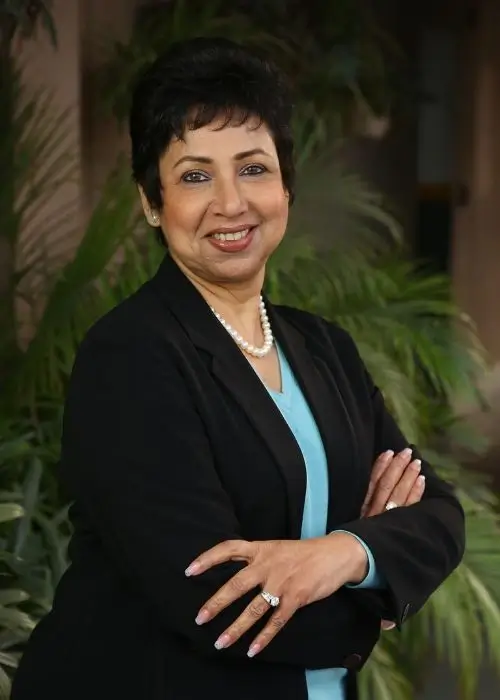
Marshall Goldsmith Stakeholder Centered Coaching: Why the Methodology Matters
Most CEO Coaching conversations rely on the leader's own account of their progress. MGSCC was built to close that gap: rather than measuring change through self-report, it structures ongoing feedback from your actual stakeholders — board members, peers, direct reports — so that growth is verified by the people experiencing your leadership day to day, not assumed from the coaching room alone.
For a CXO whose credibility is built entirely on how consistently their judgment is trusted by others, this distinction is not academic. It is the difference between coaching that feels good and coaching that changes how the organisation actually experiences you.
Stakeholder-Verified Growth
Progress is measured directly through systematic feedback from boards, peers, and teams.
Zero Self-Report Bias
Closes the illusion gap between how leaders believe they lead and how they are experienced.
Business Outcome Anchored
Engagements tie directly to strategic priorities, board mandates, and succession pipelines.
Boardroom Confidentiality
An uncompromising standard of privacy, operating as your unattached sounding board.
"Leadership growth at the CXO level must be tangible to the organisation. MGSCC ensures your evolution creates measurable stakeholder trust."
The 9C Model: How the Coaching Is Structured
Alongside MGSCC's stakeholder-verification approach, engagements are anchored to a proprietary architecture — the 9C Model — so that progress is deliberate rather than accidental. The model moves a leader systematically through nine dimensions of executive maturity:
Clarity
Clarity of purpose, decision ownership, and separating what is yours to own from what must be entrusted to your team.
Confidence
Quiet, internal confidence untethered from external validation, grounding your leadership in authentic self-worth.
Conviction
Holding strategic direction under pushback and board scrutiny without defensive reaction or premature concession.
Courage
Taking bold, calculated risks in high-stakes moments and having the crucial, candid conversations that matter.
Composure
Unshakable emotional regulation and presence when crises, market volatility, or high-stakes pressures peak.
Consistency
Predictable behavioural reliability that creates psychological safety and high performance across the executive bench.
Credibility
Deep boardroom and enterprise credibility where your judgment is instinctively trusted before you speak.
Collaboration
Building high-trust leadership teams where strategic autonomy replaces personal bottlenecking and control.
Contribution
The legacy question every CXO must sit with — shaping sustainable enterprise value and enduring societal impact.
Diagnosing Before Coaching: The EPQ Assessment
Most Senior Leadership Coaching begins with a conversation. Mine begins with data.
The EPQ (Executive Presence Quotient) is a proprietary psychometric instrument I developed specifically because generic personality assessments were not built to measure the dimensions that actually determine executive success — gravitas, communication command, and behavioural consistency under pressure.
For CXO engagements, EPQ is typically run as a 360 instrument alongside the MGSCC stakeholder process, so coaching time is spent on the two or three things that will move outcomes, not a generic twelve-month curriculum.
A Client Story: The Founder Who Had No One to Ask
A first-generation founder, five years into scaling a business past the point where instinct alone could carry every decision, came into coaching after a board member quietly observed that he was "still running the company like it had twelve people, not twelve hundred." He wasn't short on confidence in public. In private, every major call — a leadership restructure, a geographic expansion, whether to bring in outside capital — was being made alone, at night, with no one inside the business he could think out loud with without it becoming political.
Using the 9C Model, coaching started at Clarity: separating decisions that were genuinely his to own from decisions he had simply never delegated because delegating felt like losing control. Stakeholder input gathered through the MGSCC process surfaced something he hadn't seen — his leadership team wasn't waiting to be told what to do; they were waiting to be trusted with it.
Eighteen months on, the geographic expansion had launched under a leader he had promoted rather than run personally, and board meetings that once ran long on operational detail now ran short, on strategy. The decisions hadn't gotten smaller. His need to make all of them personally had.
The "I Am Unlimited" Leadership Retreat
For CXOs who want a step-change rather than an incremental one, coaching can be paired with "I Am Unlimited" — an immersive Executive Presence Leadership Retreat that takes the individual coaching work and compresses it into a concentrated, off-site experience.
Away from calendar pressure, leaders work through the deeper inner-game questions alongside a curated cohort of peers navigating the same altitude. It creates the breakthrough, and ongoing coaching makes it durable.
Elevate Executive Presence with 3Ps
Much of this methodology is documented in my book, Elevate Executive Presence with 3Ps: Poise, Power, Performance — written not as a leadership theory text but as a practical companion for exactly the leaders this coaching serves.
Clients frequently use it as a shared reference point during the engagement, and it remains one of the most direct ways to understand the thinking that shapes every coaching relationship.
Who This Coaching Is For
This strategic thinking partnership is built specifically for leaders operating at the enterprise altitude:
CEOs, Managing Directors & CXOs
Seeking a confidential thinking partner outside the internal politics and dynamics of their organisation.
First-Generation Founders & Business Promoters
Scaling into a large-enterprise role that their current leadership operating system has not yet caught up to.
Leaders Preparing for Board Exposure & Succession
Senior executives stepping into an enterprise-wide mandate, succession race, or public-facing role.
High-Performing Executives Seeking Resolution
Achieved every external marker of success but sense something quieter is unresolved underneath it.
Leaders Who Value Proven Boardroom & P&L Experience
Executives seeking a coach with 20+ years of genuine corporate P&L leadership and credentialed to the highest global standard (ICF-PCC, MCC underway, MGSCC).
How an Engagement Works
Every C-Suite Coaching relationship begins with the EPQ diagnostic and a confidential conversation about what "progress" needs to look like six months from now — in business terms, not just personal ones.
1. Diagnostic & Alignment
EPQ assessment and confidential goal-setting mapping desired business and behavioural outcomes.
2. Live Calendar Pacing
6 to 12 month cadence structured around the 9C Model, live board cycles, restructurings, and succession calls.
3. Uncompromised Privacy
Board-level confidentiality. Nothing discussed shapes any narrative outside the room without your direction.
Sessions are conducted with the same confidentiality standard you would expect of board-level counsel. Nothing discussed shapes any narrative outside the room, and nothing is reported back to your organisation unless you choose to share it.
Trusted by Leaders from Renowned Organisations
Coaching interventions and executive development delivered across leading global brands:


Frequently Asked Questions
Common questions regarding CXO & Executive Coaching, credentials, and methodology.
Related Coaching & Training Tracks
If the immediate gap is how you're perceived rather than how you decide, explore Executive Presence Coaching & Training. If it's about how your message lands in the room, explore Leadership Communication Training. For diagnostic benchmarking, explore the EPQ Assessment.
Where Leadership Journeys Turn into Success Stories
Real Stories. Real Growth. Real Impact.