Why Some People Speak Less but Influence More
July 08, 2026
"The most influential person in the room is not always the one who speaks the most. Often, it is the one whose words carry the most weight."
-- Coach Samira Gupta
Have you ever walked out of a meeting and realised that the person who made the biggest impact hardly spoke at all?
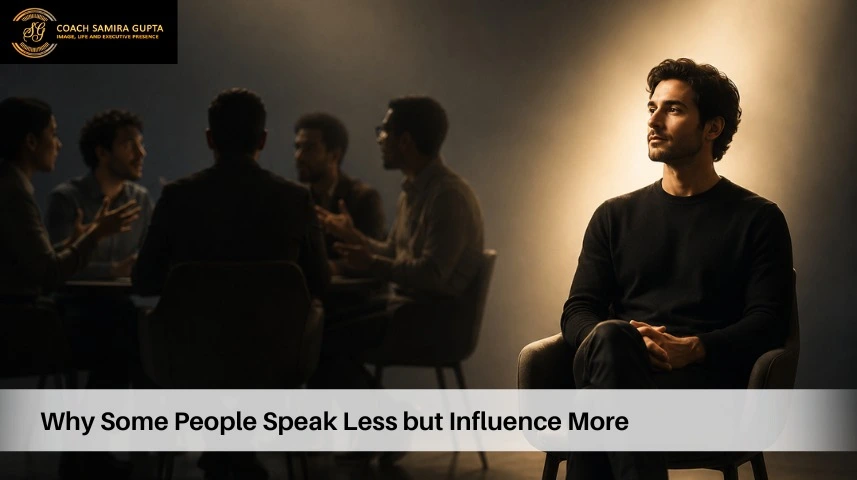
It is an interesting phenomenon. While some people dominate conversations, jump into every discussion, and constantly share their opinions, others speak only when necessary. Yet somehow, when they do speak, everyone listens. Their ideas are remembered. Their suggestions are considered carefully. Their presence lingers long after the meeting ends.
This often leaves people wondering: what do they have that others do not?
The answer is not necessarily greater expertise, a senior title, or even exceptional public speaking skills. More often than not, it comes down to a combination of Executive Presence, thoughtful communication, credibility, and the kind of influence that does not need to announce itself.
In today's workplace, where everyone is competing for attention, the ability to speak less and influence more has become one of the most powerful leadership skills a professional can develop. Understanding why it works can help you build stronger relationships, communicate more effectively, and create a lasting impact.
Why We Often Mistake Talking for Influence
Many people assume that influence comes from visibility. The logic seems simple: if you contribute more, speak more, and share more ideas, people will naturally see you as influential.
But influence does not work that way. We have all encountered situations where someone talks continuously during a meeting, yet very little of what they say is remembered afterward. On the other hand, another person might contribute only a few thoughtful comments, but those comments shape the entire discussion.
The difference is that influence is not measured by the number of words spoken. It is measured by the value, clarity, and credibility behind those words. This is one of the reasons why leadership communication skills matter as much as technical expertise. Effective communicators understand that communication is not about filling silence. It is about creating understanding and impact.
The Quiet Power of Thoughtful Communication
People who influence others often have a habit that many professionals overlook. They think before they speak.
Rather than rushing to contribute, they listen carefully. They absorb information, identify patterns, and understand the dynamics of a conversation before sharing their perspective. As a result, when they finally speak, their comments feel relevant, insightful, and timely.
This does not mean they are naturally quiet or introverted. It simply means they are intentional. In professional environments, thoughtful communication builds more trust than constant communication. People begin to associate that individual with quality rather than quantity. Over time, this builds credibility, which is one of the strongest foundations of workplace influence.
Why Listening Is a Leadership Superpower
When discussing Executive Presence, listening rarely receives the attention it deserves. Yet some of the most respected leaders are exceptional listeners.
They understand that every conversation contains valuable information. By listening carefully, they gain insights into people's concerns, motivations, and perspectives. This allows them to respond in a way that feels meaningful rather than reactive.
Strong listeners consistently:
- Make people feel genuinely heard and understood, which strengthens trust and relationships naturally over time
- Pick up on concerns, tensions, and opportunities that others miss because they are too focused on expressing their own opinions
- Ask thoughtful questions that encourage deeper discussions rather than surface-level conversations
- Build a reputation for fairness because people feel their perspectives are being considered
Interestingly, people often perceive great listeners as stronger leaders because they create space for others while still guiding the conversation effectively.
The Connection Between Confidence and Silence
One of the biggest misconceptions in the workplace is that confident people always have something to say. In reality, confident professionals are often completely comfortable with silence.
They do not feel pressured to prove their intelligence in every meeting. They do not interrupt to make sure their voice is heard. They do not rush to answer every question. Instead, they trust that when they do contribute, their words will carry weight. This kind of confidence often reflects a strong professional presence.
Think about the leaders you admire most. Chances are they do not speak just for the sake of speaking. They contribute when they have something meaningful to add. That confidence is often exactly what makes others pay attention.
People Trust Consistency More Than Volume
Influence is built over time. It develops through repeated experiences where people see that your actions, words, and decisions align with one another.
Someone who constantly shares opinions but rarely follows through may gain attention, but they often struggle to earn trust. On the other hand, professionals who consistently deliver results, support their teams, and communicate clearly tend to develop stronger influence.
When people know that your words are backed by action, they naturally begin to value your perspective more highly. This is a key aspect of both leadership presence and long-term professional credibility.
Why Presence Often Matters More Than Volume
There is a reason why certain people can walk into a room and immediately capture attention without saying much. Their influence comes from presence, and presence is not about being the loudest person in the room. It is about how people experience you.
It reflects:
- The confidence you project during conversations
- The way you respond under pressure
- The respect you show toward others
- The consistency between your words and actions
- The sense of calm and clarity you bring into discussions
People with strong Executive Presence often communicate confidence before they even begin speaking. This is why their contributions tend to carry more weight regardless of how much they say.
The Workplace Cost of Speaking Too Much
Speaking too frequently can sometimes reduce your influence, and this might sound surprising but it is more common than most people realise.
When professionals feel the need to comment on everything, a few things often happen:
- Their most valuable insights get lost among less important comments, making it harder for others to identify what truly matters
- Colleagues may start tuning out because they know another opinion is always coming
- Conversations become less collaborative because others have fewer opportunities to contribute
- The individual may appear more focused on being heard than on genuinely understanding the discussion
Influential professionals understand that restraint can be powerful. Sometimes saying less actually makes people pay more attention.
How to Speak Less and Influence More
Developing influence does not require becoming quieter overnight. Instead, it involves becoming more intentional about how you communicate.
Focus on Contribution, Not Participation
Before speaking, ask yourself whether your comment will move the conversation forward. The goal should not be to participate in every discussion. The goal should be to contribute meaningfully when it matters.
Ask Better Questions
People often underestimate the influence of a great question. Thoughtful questions can shift perspectives, uncover new insights, and guide discussions in productive directions. In many situations, asking the right question creates more impact than providing the right answer.
Become Comfortable with Pausing
A brief pause before responding demonstrates thoughtfulness and confidence. It allows you to process information and formulate a more effective response. More importantly, it prevents reactive communication, which is one of the quietest destroyers of Executive Presence.
Build Expertise and Credibility
Influence becomes easier when people trust your judgment. Investing in your knowledge, skills, and professional growth helps ensure that when you speak, people recognise the value behind your perspective.
The Leaders We Remember Rarely Talk the Most
Think back to the most influential leader, mentor, or manager you have worked with. Was it their volume that made them memorable? Probably not.
More likely, it was their ability to communicate clearly, remain composed under pressure, ask thoughtful questions, and create trust. These are the qualities that shape lasting influence. They are also the qualities that define strong Executive Presence.
People may forget long speeches and endless discussions. But they rarely forget someone whose words consistently made them think, learn, or feel understood.
Conclusion
In a world that often rewards visibility, it is easy to assume that influence comes from speaking more. The reality is quite different. The people who influence others most effectively are almost always those who communicate with intention. They listen carefully, think thoughtfully, and contribute meaningfully.
Their influence is not built on volume. It is built on credibility, trust, and the kind of Executive Presence that does not need to fill every silence to be felt.
The next time you find yourself in a meeting or a high-stakes conversation, remember this: your goal is not to say more than everyone else. Your goal is to say something worth remembering.
Frequently Asked Questions
Q: Why do some people influence others without speaking much?
A: They build trust through credibility, thoughtful communication, strong listening skills, and Executive Presence rather than relying on constant visibility. Influence comes from the weight of your words, not the frequency of them.
Q: Is speaking less a sign of confidence?
A: Not always, but confident professionals are generally comfortable with silence and do not feel the need to contribute to every conversation. Their confidence comes from knowing that when they do speak, it will count.
Q: How can I improve my Executive Presence?
A: Focus on active listening, clear and intentional communication, self-awareness, credibility, and consistency between your words and actions. Working with an Executive Presence coach can accelerate this significantly.
Q: Can introverts be influential leaders?
A: Absolutely. Influence is not determined by how much you speak but by the quality of your communication and the trust you build with others. Many of the most impactful leaders are naturally introverted.
Q: What is the relationship between listening and leadership?
A: Strong listening helps leaders understand people better, make informed decisions, and build stronger relationships, all of which contribute to greater influence and stronger Executive Presence over time.
Ready to develop the Executive Presence that makes every word count? Work with Coach Samira Gupta through personalised One-to-One Coaching or join the I Am Unlimited Leadership Retreat in Goa, India's first Executive Presence retreat. Only 20 seats.
Call: +91 9958934766 | Email: samira@auraaimage.com | Website: www.samiragupta.com